
Sciatica & Slip DiscPublished on August 12, 2026
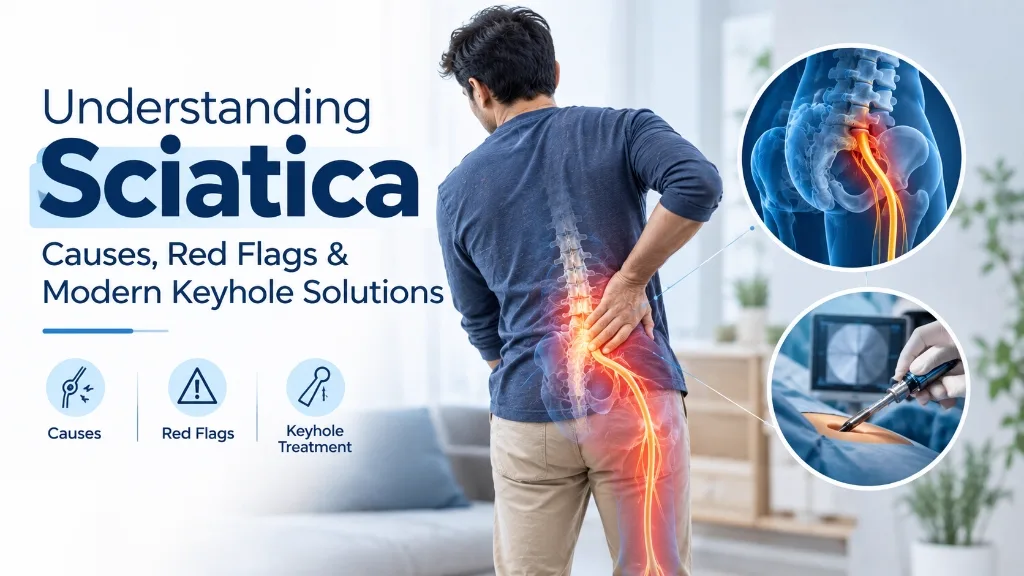
Understanding Sciatica: Causes, Red Flags, and Modern Keyhole Solutions
Learn why shooting leg pain occurs when the sciatic nerve root is pinched by a herniated disc, when you should see a neurosurgeon, and how keyhole discectomy provides instant relief.
AG
Dr. Achal Gupta
Consultant Neurosurgeon & Endoscopic Spine Surgeon
Surgeon's Key Clinical Takeaways
- Sciatica is most commonly caused by L4-L5 or L5-S1 disc herniations.
- Progressive muscle weakness or numbness requires immediate diagnostic MRI review.
- Endoscopic discectomy relieves nerve compression with precision micro-graspers.
What Causes That Shooting Nerve Pain?
The sciatic nerve is the longest and thickest nerve in the human body, originating from spinal levels L4 through S3. When an intervertebral disc herniates (slips), its gel-like nucleus pulposus extrudes outwards, mechanically compressing the exiting nerve root against the bony spinal canal.
This mechanical pinch produces intense radiating pain, numbness, tingling sensations, or burning discomfort traveling through the buttock, hamstring, calf, and into the foot.
Red Flag Symptoms That Demand Immediate Evaluation
While many mild disc bulges improve with conservative medication and physiotherapy, certain neurological warning signs require urgent neurosurgical appraisal:
1. Progressive weakness in the foot (foot drop or inability to stand on heels/toes).
2. Sudden loss of bowel or bladder control (Cauda Equina Syndrome).
3. Severe intractable pain that prevents sleep and fails to respond to nerve pain medications.
Targeted Keyhole Decompression
When surgery is indicated, Endoscopic Lumbar Discectomy removes only the herniated disc fragment pressing on the nerve, leaving 90% of the healthy cushioning disc intact and relieving radiating leg pain almost instantaneously.
Related Medical Conditions & Surgical Treatments
Medical Condition
Slip Disc Surgery (Sciatica Root Relief)
Relief of L4-L5 and L5-S1 sciatic nerve entrapment.
Explore Condition & Symptoms
Medical Condition
Spondylolisthesis (Vertebral Slip)
Instability-related sciatic nerve root compression.
Explore Condition & Symptoms
Treatment Procedure
Full-Endoscopic Lumbar Discectomy
Instant Sciatic DecompressionView Surgical Technique & Recovery

Frequently Asked Questions (FAQs)
Frequently Asked Questions
Clear, evidence-grounded answers to the most common patient queries.
The sciatic nerve originates from spinal nerve roots (L4 to S3) in the lower spine. When an L4-L5 or L5-S1 disc herniates, it compresses the nerve root, causing radiating electrical pain, tingling, and numbness all the way down the sciatic pathway into the calf and foot.
Diagnosis involves a thorough neurological clinical examination (including straight leg raise test and motor reflex testing) combined with a high-resolution Lumbosacral Spine MRI to pinpoint the exact level and severity of nerve entrapment.
Non-surgical options include anti-inflammatory and neuropathic medications, structured nerve-flossing and core physical therapy, short-term activity adjustments, and image-guided transforaminal epidural injections.
Surgery is indicated when unbearable leg pain fails to respond to 6–8 weeks of medical care, or when progressive muscle weakness (such as foot drop) or cauda equina symptoms appear.
Radiating leg pain is usually relieved almost instantaneously upon waking from the procedure. Patients typically resume desk work within 7 to 10 days and return to full active routine within 4 weeks.
Tags:#Sciatica#Herniated Disc#Nerve Pain#Lumbar Spine
AG
Dr. Achal Gupta
DrNB Neurosurgery • NSSA • FISS
Specializing in 7–10mm keyhole endoscopic spine surgery, disc herniations, and spinal stenosis at Neuron Brain & Spine Centre, Lucknow.
Related Articles
Patient Guide
Spine Surgery Cost in Lucknow: What Nobody Explains Upfront (and How to Avoid Surprise Bills)
6 min readEndoscopic Spine SurgeryOpen vs endoscopic spine surgery: what is actually different for you
3 min readAcademic InsightsEveryone Is Asking About "Keyhole" Spine Surgery in Lucknow: Are You a Candidate? (Recovery Timeline Inside)
6 min readNeuron Brain & Spine Centre • Gomti Nagar, Lucknow
Consult with Dr. Achal Gupta for Precision Spine & Neuro Care
Whether you are seeking definitive relief from severe sciatica, slipped disc, or exploring minimally invasive endoscopic alternatives, we are here with ethical, compassionate guidance.
Neuron Brain & Spine Centre • B-2/1, Vibhuti Khand, Gomti Nagar, Lucknow
•Mon – Sun Consultation Hours Available